Deciding on what project to pursue (or, overcoming shiny new object syndrome)
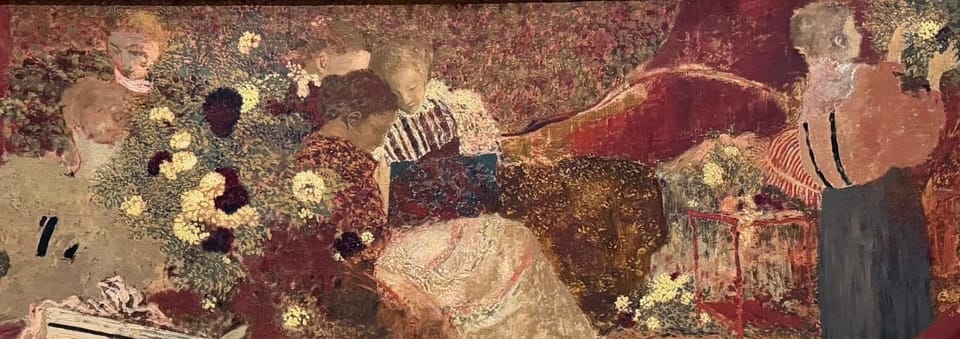
There's a pretty standard question in author interviews that goes, "Where do you get your ideas from?"
This isn't something I've typically struggled with. (It's come up more in recent years, but that's for a later post). Ideas are constantly plopping into my head, triggered by all sorts of things—conversations with friends, a piece of art, a book, a song, a movie. Oftentimes they're no more than a concept or a line. Here are some examples of ideas that eventually became stories for me:
- Little Red Riding Hood who is baking pies for the wolf
- Mebuyen (many-boobed goddess of the underworld)
They last in that form for awhile. It's not that I think ideas are necessarily "the easy part." A fresh idea is pretty special (yes yes I know there are no new ideas, but I mean the particular slant to a concept, something that has spark, that makes you want to write it). Most of the heavy lifting, though, is in making the idea something that's uniquely yours, something that works when you bring it to the page. For me that usually happens when another element or two suddenly "unlocks" the bigger vision for the piece.
Taking those two earlier examples, these were the layered elements that made them a story to me:
- Little Red Riding Hood x Beauty (as in and the Beast); they are both traumatized by their monster-husbands; they fall in love
- Mebuyen x Duterte's Drug War and his victims (per the Impunity Series)
Usually I'd be hoarding the initial idea in my mental drawer, chewing on it from time to time, and waiting for the right thing to transform it into something I can write. This process can take years. I have a short story I really love that's 70% written, but I don't know what the remaining 30% it needs is, and I've been sitting with it since 2019. (I have gotten advice on what it might need, and I haven't spent time on fixing it, so there's that).
As a short story writer, juggling multiple ideas always felt pretty standard. For years as a teen I had a word doc called Ideas to Follow Up On that included titles, lines, concepts, bits of story. When I went to Clarion in 2013 I had a handwritten page of ideas to pull from if I got stuck. When I started publishing professionally, I kept .rtf docs entitled Freewriting [Season] [Year] where I would document what I was working on, and throw in possible ideas. Sometimes I'd add stuff to my paper journal, or to one or two other "write by hand" notebooks. Idea collection was chaotic and haphazard and I couldn't explain my process for deciding when I picked what story to work on next, except that it felt ripe enough.
I initially approached writing the novel the same way. I had at least five ideas that I felt could become books.
- A: I wrote a novella version of this story in 2015. It was a retelling of a Filipino epic poem that is required reading in high school. I had the characters, and an extremely broken draft that I didn't know how to revise.
- B: this was a newer idea that was mostly vibes but the vibes were soooo good and wouldn't leave me alone. I used a homework assignment in my Fiction Workshop at Harvard to write a short story set in this universe.
- C: I'd written a novelette for this, and it was fresh and fun and two people whose opinion I respected said the idea really intrigued them. I'd been chewing on this one for a while, particularly in terms of its aesthetics.
- D: I'd written scraps for this idea and workshopped 15 pages of it at Taos Toolbox. I loved the characters but there was a fundamental setting choice I was struggling with.
- E: a story I'd tried writing openings for a few times; I liked the characters and concept, but was iffy on the genre I'd settled on.
I've actually been talking about some of these ideas for years. They're scattered across some old interviews.
In 2018, during my time off before the MBA, I read a lot about plotting and tried applying plot exercises to three of these ideas simultaneously. I did the same thing in the summer of 2019. I'd flesh out the concepts, write scraps, noodle on the characters. But I wasn't getting very far in anything. I'd dip in, but when it got tough, I'd switch over to a different concept and see if that would maybe go better.
This is fine, I thought. At some point I'll figure out which one my first book should be and then I'll focus.
I didn't though. I just kept bouncing around the ideas. I knew it was inertia, but I couldn't seem to make myself pick. This is a rookie mistake!! I hollered at myself. It is one of the fundamentals of writing to finish!!
But I was too afraid to pick and start, let alone finish.
I solved this, as I have solved many things in life, by asking someone much more experienced than me.
I've talked before about how Karen Joy Fowler got me unstuck regarding zero drafts. In that same phone call, we actually discussed my shiny new object syndrome. I'd forgotten what was going through my mind that was preventing me from drafting. Luckily (as my coworkers know, lol) I take copious notes on everything—including the questions I wanted to ask Karen, and her reply.
Reading them back now, I think my inability to choose an idea stemmed from three fears:
- I was overthinking the genre and marketability of what to work on. I wanted to write a secondary world or space opera, but I felt like I was going to write them 'slow and literary,' which seemed incongruent with those genres.
- I was afraid to 'jump in' without having the plot all figured out. I don't know the story yet. Don't I need to know it, before I start?
- I was waiting to have more ideal time and space to write. I thought it would be better to start when I had a nice big stretch of writing time in front of me: like after graduation, preferably during a residency! (Unfortunately, covid and my own panic about employment had other plans.)
I hadn't articulated these so clearly back then, but in hindsight, that's mostly what it was.
Karen, as usual, gave me excellent advice. Some of her responses are paraphrased below:
On concerns about market and genre
- Write the books that you like to read. It seems deadening to write a book that seems to fit the imagined market expectation that isn’t what you’re interested in and what you yourself like. You are far from the only person who prefers those kinds of stories (slow and literary despite being genre), so you should absolutely pursue that kind of story.
On not knowing the whole story before starting
- I don't know what the competing ideas are, but I wouldn't be so worried that you don't know the whole story yet. I usually have a plan, but I’m always prepared to jettison the plan. The original plan is kind of a Dumbo’s feather that gets me into the story long enough to figure out what I’m actually interested in.
- A friend said every story she writes rises from the ashes of the story she thought she was writing.
- Where the story starts and where the story ends are decisions to be made later. And it probably won’t be the right place, so just pick a place to start. Anything that gets you moving into the story.
- One of the questions you’re going to keep asking yourself is, where does this story start? Paradoxically you don’t need to know that before you write the story.
- Frequently I don’t know where it starts until it ends. And I don’t know where it ends until I’ve written the ending. It’s a very rewrite-intensive process, but it’s the only way it’s fun for me, if I’m constantly problem-solving.
On switching between different ideas and jumping ship when one starts to get hard
- I have this habit of hitting places in the work where I’m less happy, and I start to really long to be writing a different story. Nothing ever is as exciting to me as the story I’m going to write next, whenever I finish the stupid story that I’m currently writing. But as soon as I’m writing the story I couldn’t wait to write, it’s going to become the stupid story.
- I was in a writing workshop for almost 30 years, with a guy who is a fabulous writer...but in 30 years he never finished a single project. He always put down the one he was working on. Not 20 pages in. He got 350 pages in…and he always told himself: I’m not abandoning this story, I’m definitely going to come back and finish it, but I’m excited about this other idea. He did that over and over and over again. He never finished a single piece. Page by page, he’s one of the best writers I know.
- It frightens me as a pitfall…that you can always put down a story that’s giving you grief, in order to pick up a story that will give you grief.
That last anecdote, about the writing group guy who was an excellent writer but never finished anything, was actually my wake-up call. Oh god! I thought. And I looked back at my two-ish years of flip-flopping between ideas and thought: you know what. I gotta stop this. I gotta just pick one and go with it.
The other ideas would still be there. But if I didn't focus on one, none of them would ever get written.
So that's the story of how I got freaked out enough that the pain of deciding on what to write was suddenly more palatable than the pain of being that one guy that never finishes anything.
From there, mechanically, how did I choose between the five story ideas? Here's where I actually do have some of my own advice. All things being equal:
- Choose the story that you think will be easiest to write. It's going to be hard regardless, so why not pick something that you think will be quicker? At this point, I was still trying to prove to myself I could even finish a book at all; it was not an endeavor I had any amount of confidence in. So I picked something that I thought would be easier on me to try.
- Assume that this will be your debut. Does it represent who you are as an author? Is it in a genre and style you want to be known for? Is it touching themes that matter to you? If you never wrote another book again, would you feel like this story is one you'd want to tell?
- I recognize this is somewhat extreme framing. This is because I am a slow writer, and when it comes to publishing, I'm not an optimist. It's a tough industry and although I firmly believe only you ever get to decide when to stop, there is truth to the idea that you can only debut once. (I'll have more to say about this in a future post, but the general idea holds.)
Now, if all things aren't equal and there's a story that's actually calling out to you more, pick that one. Easy. In my case, it was really a toss-up between A and B in terms of interest, but A had the done novella and was a retelling, so the idea was much farther along than B. Also, A was a much more overtly Filipino story, and that was important to me for my debut novel.
I made a choice. And then I had to do the sort of mind-trick that writing so often requires:
- I acknowledged that this was a hypothesis. If I spent three months on it and decided I didn't want to write it after all, that B or C or some fresh new idea really was the book I'd rather spend time with—nothing would stop me from switching. It wasn't like I was on contract. I had all the freedom.
- But I also tried to create a real intention around sticking with this story until the end. Only I could hold myself accountable. But in order to not be The Guy Who Doesn't Finish, I had to be strict with myself and not abandon ship at the first (or second, or twentieth) sign of trouble.
At the end of the day, it all boiled down to making a choice and standing by it.
What of the market concerns? Once I made my decision, those mostly went away. Writing the book was so hard and took so long that I didn't really have energy to spare fretting over that angle. In the half-decade I spent working on my book, I learned that I am not prolific or savvy enough to try to game the idea at its genesis; I am the sort of writer for whom that kinda kills the project.
That said, choosing a book that you think will sell better than other ideas does not seem like a bad strategy! All things being equal, pick the one that you think has a bigger audience/is easier to pitch seems like sound advice. You do still baseline have to love it to write it, I think. Certainly, now that I'm actually in the selling phase of a project, I am thinking about this. But it feels appropriate at this point; right at the beginning, I'm not sure it's productive.
If you're currently waffling between novel ideas, I hope some of this is helpful! Do some meditation, some journaling, listen to your heart (woo but true), and then: pick the thing. Commit to that choice, and allow yourself some peace.
Quick Hits
(A new corner I'm adding with random stuff I want to share 👯)
- Podcast: The Shit No One Tells You About Writing, particularly the Shooting the Shit series, which is two agents talking shop about the publishing industry.
- I'm a casual figure skating enjoyer and have been ever since I saw Yuzuru Hanyu's Parisienne Walkways routine in Sochi 2014 (I love a wailing guitar). I've been watching routines recently as part of my night-time wind-down. My favorite free skate routine ever (also Yuzuru's) is this one from his first World Championships.
Thanks for reading! If you enjoyed and aren't yet a subscriber, feel free to sign up, or share with a friend. If you no longer wish to receive these emails, do unsubscribe—I won't be hurt, and I never want to clutter up someone's inbox.
If you have a question for me, you can send it here.
Buy my book | Take my five-minute reader survey | How I wrote a novel series
What about having more ideal time/space to write? That's the topic of the next two newsletters. (Spoiler alert: it never really comes, so you have to make do.) Until then, I hope you keep well!
Member discussion